
In Search Engine Optimization estimation is basic to progress. Indeed, keyword rankings are an awesome measure of SEO. More keywords ranking higher means more traffic, correct? Yet, detailing exclusively on keywords depreciates the advertiser's part and doesn't paint the full picture of why SEO is essential to the association. Going past watchword rankings enables advertising groups to grandstand what truly matters: how natural hunt conveys income and benefit to the business. Gratefully, one of the best apparatuses for measuring SEO is unreservedly accessible, and most likely as of now introduced on your site – Google Analytics!
Albeit each business is unique and each site has diverse measurements that issue, this post is a widespread rundown of 5 approaches to utilize Google Analytics to report the accomplishment of your businesses SEO efforts.
1. How To View Only Organic Search Traffic
This one may appear glaringly evident. I'm generally astonished at what number of organizations see a decrease in general site traffic and promptly hop to the conclusion that the traffic misfortune is because of a decrease in natural hunt traffic. Commonly burrowing somewhat more profound can really uncover that natural traffic is up while other traffic sources are down which is bringing about the general traffic decrease.
The initial phase in taking a gander at Organic Search traffic after some time is to open your Channel Grouping report which can be found by clicking Acquisition > All Traffic > Channels. There you will see traffic sources divided by channel.
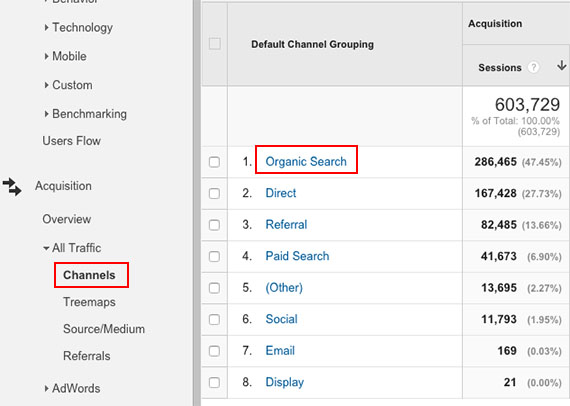
Tapping on the "Natural Search" channel will give you a more definite report which incorporates just natural inquiry traffic measurements.
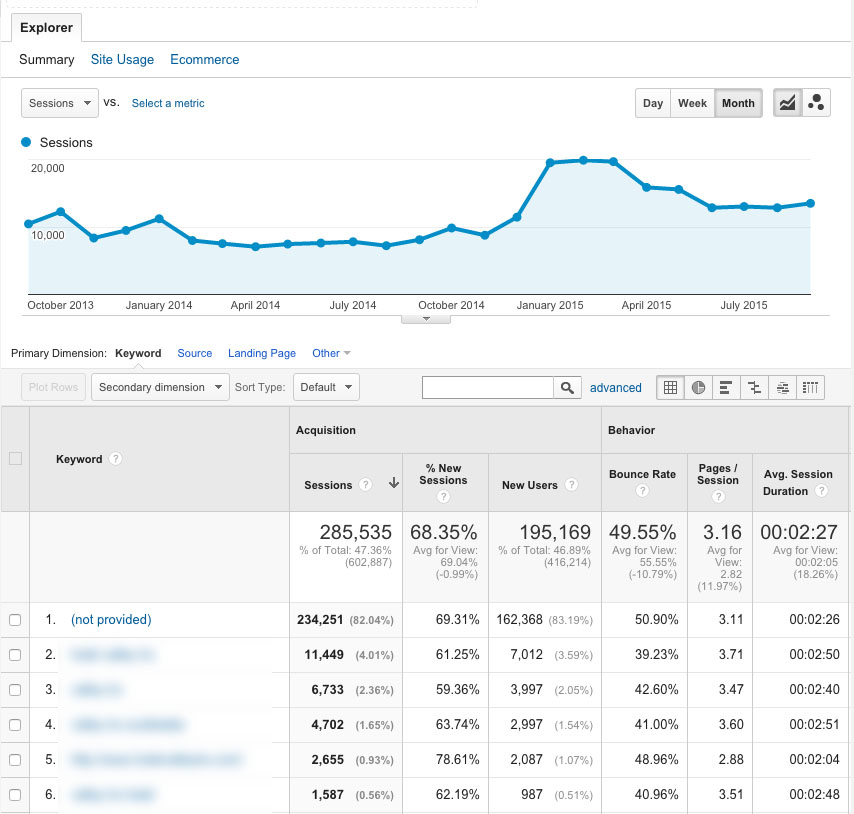
This report will be the Swiss Army Knife to your SEO announcing. From this report you can decide things, for example, the best points of arrival for seek traffic, keywords driving the most traffic, which web indexes are sending the most traffic, top leave pages and a whole lot more.
2. How To Measure The Quality Of SEO Traffic
A ton of times I hear that "quality" is subjective, so you can't generally quantify it. I don't trust this to be valid and actually, I'd say there are a ton of approaches to gauge the nature of any traffic source, not simply seek.
The most well-known report I use to gauge a change or decrease in the nature of hunt traffic is the Assisted Conversions report (Conversions > Multi-Channel Funnels > Assisted Conversions). With this report dynamic I jump at the chance to begin by setting the date range to 'A month ago' and contrasting it with 'Past period'. What you're left with is a month-to-month correlation of transformations straightforwardly from seek, or in case of numerous visits to the site, changes where look assumed a part yet is not specifically credited with the transformation (ie: the guest found the organization through pursuit, yet returned straightforwardly and changed over).
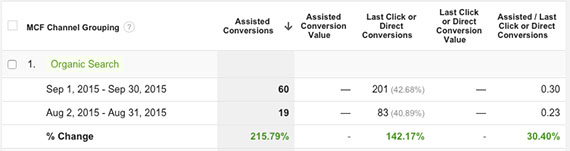
Utilize this answer to search for a decay or change in transformations from seek traffic. On the off chance that businesses see a decrease in changes from seek, yet general inquiry traffic is consistent, it's anything but difficult to verify that the traffic originating from look is not qualified or of a high caliber.
In like manner, in the event that you start concentrating on a more refined arrangement of keywords and see a change in transformations from seek traffic, you can state your SEO traffic quality is moving forward.
3. Assigning Dollar Values To Organic Traffic
This is a system I use for businesses who are searching for a more conventional approach to comprehend the esteem SEO is conveying to their business past upgrades in traffic, perceivability and transformations by doling out a dollar incentive to their natural traffic comes about. To allocate an aggregate dollar incentive to a destinations natural traffic, I look at how much the keywords would cost if obtained in a Google AdWords battle.
Note: For this methodology to work you will require access to a Google AdWords account, and your Analytics should be matched up with your Search Console account.
To discover a locales catchphrase search queries and inquiries, explore to Acquisition > Search Engine Optimization > Queries.
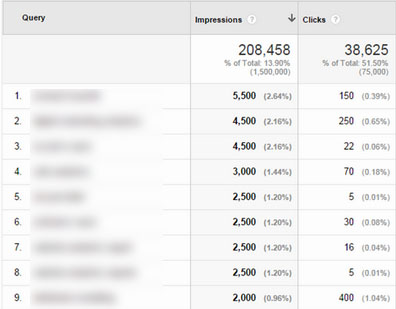
With this report pulled up, open your AdWords account in another tab and snap Tools > Keyword Planner. For this procedure we need to pick "Get look volume information and patterns", enter the best keywords from your Google Analytics Queries report, and snap "Get seek volume." On the following screen click "Keyword Ideas." Each keyword you've entered will have a Suggested Bid sum which is a gauge of what publicists are as of now paying per click for every watchword recorded.
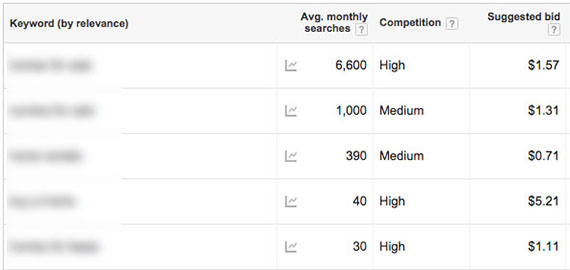
In a spreadsheet I will list every single known keywords directing people to the site, the measure of snap throughs from every keyword, and the assessed cost-per-click. The last section in the spreadsheet is the entirety of the evaluated cost per click increased by the measure of snaps, bringing about the aggregate natural traffic esteem per keyword.
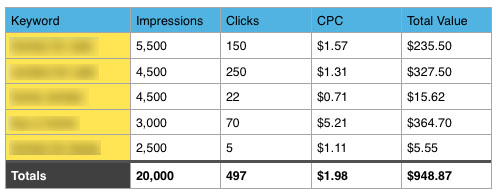
This is an extraordinary procedure to picture what sort of dollars and pennies a businesses SEO methodology is sparing them on traffic they would somehow or another need to pay for.
4. Identifying Slow Loading Page Times
The need to upgrade page stack times is one thing that is significantly disregarded by many SEO's. Notwithstanding how moderate stacking pages influence the client encounter, page speed has turned into a central point in look rankings. That is the reason I generally recommend that if a business is putting time and cash in SEO and keyword rankings, don't pass up disregarding a moderate stacking site.
While we wouldn't discuss how to make a site stack quicker, I need to take a gander at how to distinguish moderate stacking pages and measure their effect on transformation rates.
To gauge page stack times on a page-by-page premise explore to Behavior > Site Speed > Page Timings. I get a kick out of the chance to set the center section to 'Avg. Page Load Time' and the correct section to '% Exit'. I likewise will ordinarily include an 'Auxiliary Dimension' of Medium, and channel down to indicate just natural traffic.
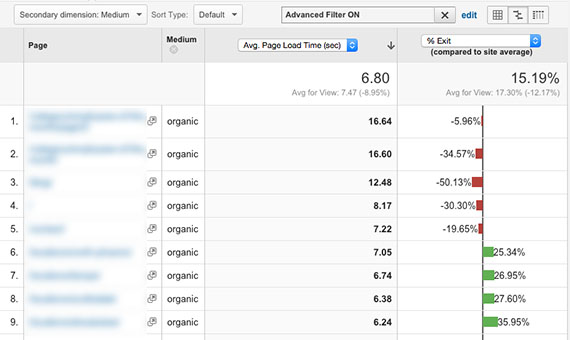
What this report demonstrates us in the best most line is the normal page stack time site wide, and the normal leave rate (where a guest chooses to leave the site) on a page-by-page premise. It's additionally genuinely simple to find in this report as our page stack time outperforms our site wide normal, our leave rates start to soar.
As a SEO, what I will do is convey this answer to the site engineers and request that they do all that they can to advance page stack times. When page stack times have been enhanced, I will run this same report and contrast it with the old information to demonstrate how much extra inquiry traffic we've held, and no doubt changed over because of the change in page stack times.
5. Create Your Own SEO Dashboard
Some of the time all it takes to move a customer or manager from a cynic to an adherent to your work is the means by which the information is introduced. It's simple as a web advertiser or all the more particularly a SEO to over account for ourselves, or incline toward difficult to-get a handle on measurements. Some of the time all the customer needs to see is visual diagrams, pie outlines and different less scary types of estimation.
The most ideal way I've found to introduce Google Analytics and SEO information is through the worked in Dashboard interface. A Dashboard is basically a progression of Widgets which pull the majority of the individual reports into a solitary view which is anything but difficult to get to, offer, and print. The reward to having an effortlessly adequate PDF of SEO measurements is the way that having this dashboard will likewise eliminate your time spent exploring Analytics giving you a chance to concentrate on really doing the SEO work.
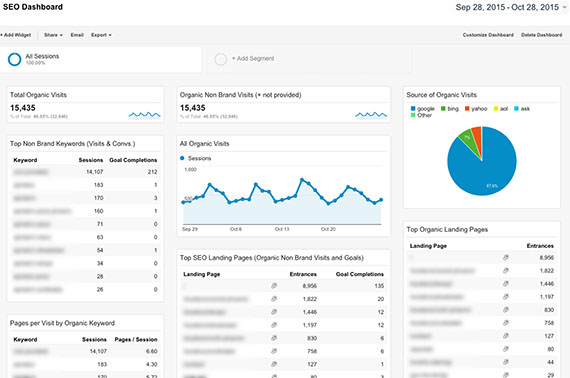
In the event that you need to avoid the points of interest and import my dashboard you can do that, generally tap on Dashboards > + New Dashboard.
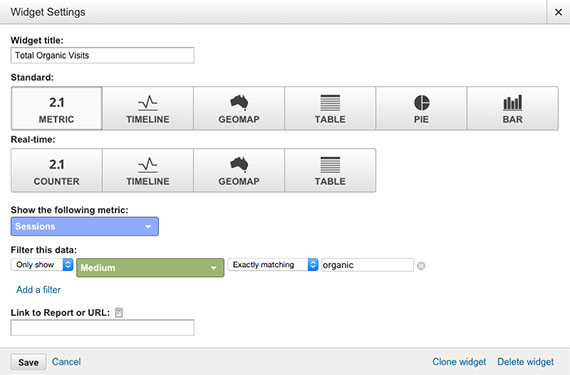
The principal gadget I generally set up is a straightforward counter to gauge add up to visits to the site from natural hunt. Tap on "+ Add Widget", and title it "Add up to Organic Visits". For this gadget I ordinarily stay with the "Metric" show. Under "Demonstrate the accompanying metric:" select 'Sessions'. Since we just need to see traffic from natural inquiry we have to make a channel. Under "Channel this information:" select Only show > Medium > Exactly coordinating > natural.
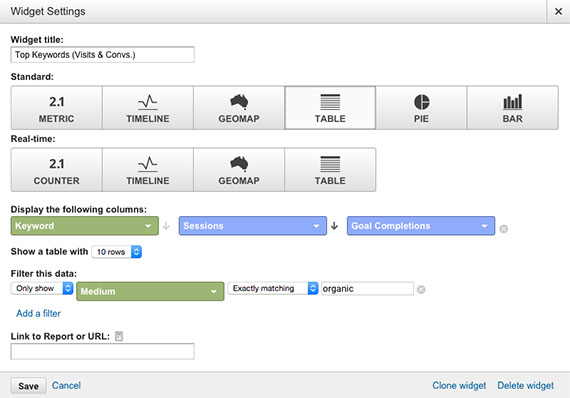
How about we set up one more gadget. My second most loved gadget measures catchphrase phrases arranged by the measure of sessions and objective consummations coming about because of the particular watchword. How about we include another gadget like some time recently, yet this time how about we set our show as "Table". Under "Show the accompanying sections:", pick Keyword > Sessions > Goal Completions. We likewise need to apply a similar natural traffic channel as our first gadget.
I like tailor these reports to the specific client, but other widgets I usually create include:
- All Organic Visits Over Time (Timeline)
- Top SEO Landing Pages
- Top Organic Keywords & % of New Visits
- Pages per Visit by Organic Keyword
- Most Successful Keywords by Goal Completions
- Turning a Challenge Into a Strength
By far, the single most challenging aspect of being an SEO is being able to effectively articulate the value you are bringing to a business. It’s easy for an SEO to show another SEO how his or her numbers are improving, but being able to quantify your work from a traffic and revenue stand point to a client or your boss is essential to earning and retaining business. If a client doesn’t understand what that check they’re writing is doing for their business, it won’t be long before they stop writing that check.
Pay attention to what metrics resonate with your client or boss and find a creative way to represent this data in your monthly SEO reports. For extra brownie points, when clients or bosses have shared access to the Analytics I always make a point to walk them through the custom dashboards showing them exactly what each widget is tracking and why it’s important to measure. Being able to educate your client on your process helps them appreciate the value you’re bringing to their business and view you as an asset to their future traffic goals.
Comments
Post a Comment